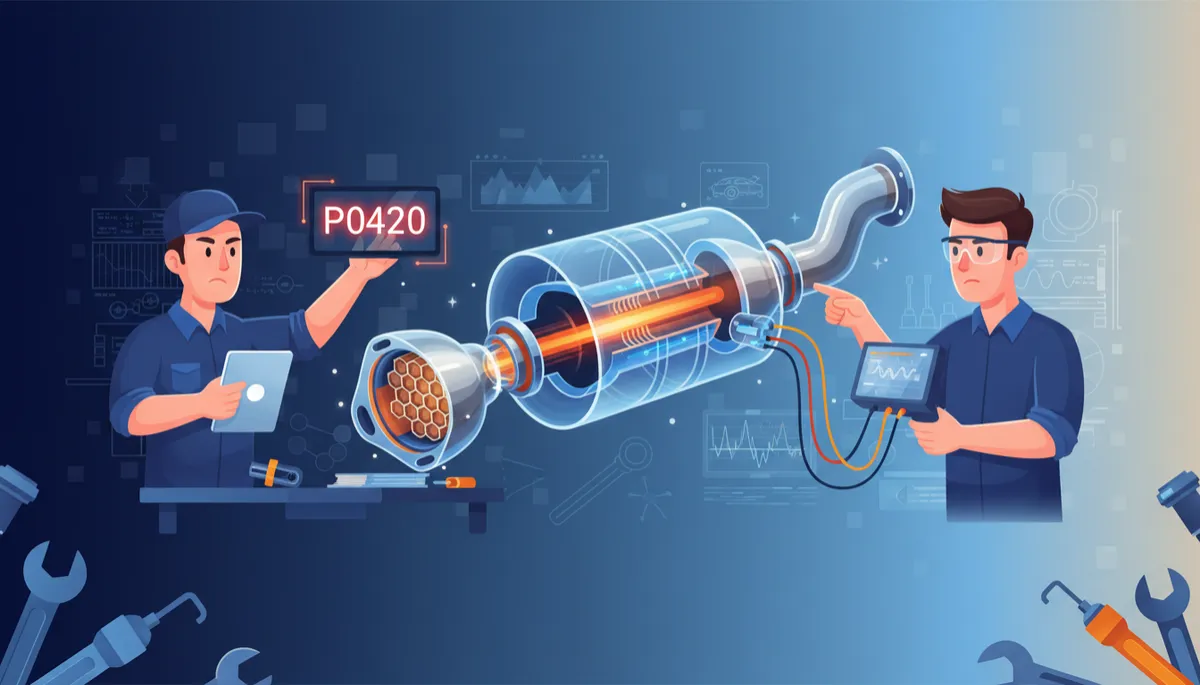
Understanding P0420: Beyond the Catalytic Converter
Auto Repair, Check Engine Light, P0420, Diagnostics
“The Local Parts Store Said It Was the Catalytic Converter” — What P0420 Really Means
When the check engine light comes on and the scanner spits out P0420, many drivers hear the same line: “It’s the catalytic converter.” But that quick answer often skips the most important step — actually diagnosing why the computer thinks the catalyst isn’t doing its job.
“The Local Parts Store Said It Was the Catalytic Converter”
The story is familiar. Your check engine light comes on, you swing by the local parts store for a free scan, and a few minutes later someone says, “You’ve got a P0420 — that’s the catalytic converter. Here’s the price on a new one.”
To be fair, parts stores are in the business of selling parts, not performing full diagnostics. Their handheld scanners read stored trouble codes, but they don’t tell the whole story. A code like P0420 doesn’t say, “Replace this specific part.” It simply reports what the engine computer is seeing: the catalyst system efficiency is below threshold (Bank 1).
That’s a crucial difference. The code points to a problem area, not a guaranteed failed component. Treating every P0420 as an automatic catalytic converter replacement can leave you spending thousands of dollars and still staring at a glowing check engine light.
Key Takeaway: A free code scan is a starting point, not a diagnosis. P0420 is a clue, not a verdict.
What P0420 Actually Says — And What It Doesn’t
Modern vehicles use oxygen sensors before and after the catalytic converter. The front sensor monitors how the engine is running; the rear sensor helps the computer judge how well the converter is cleaning up the exhaust. When the two sensors start to “agree” too much — meaning the exhaust looks nearly the same going in and coming out — the computer decides the catalyst isn’t storing and burning off pollutants like it should. That’s when P0420 appears.
Notice what’s missing: the code doesn’t say whether the converter is worn out, the oxygen sensor is lazy, there’s an exhaust leak, or the engine has been running too rich or too lean and has damaged the catalyst over time. All of those can trigger the same P0420 warning, but they require very different fixes — and very different price tags.
Reading P0420 vs. Diagnosing Why Catalyst Efficiency Is Low
The real work begins after the code is read. Proper diagnosis asks a simple but powerful question: why does the computer believe the catalyst efficiency is below threshold? That means looking beyond the code and into the conditions that caused it. A thorough technician will:
Check for other stored or pending codes that might point to misfires, fuel trim problems, or sensor issues that can mimic a bad converter.
Inspect for exhaust leaks near the front or rear oxygen sensors, which can let in fresh air and confuse the readings.
Look at live data from the oxygen sensors to see how quickly they switch and whether the rear sensor is truly mimicking the front, or if a sensor itself is slow or failing.
Review fuel trims and engine performance to spot rich or lean conditions that can overheat or poison a converter over time.
Only after these steps can someone say with confidence whether the catalytic converter itself has failed, or if it’s reacting to another problem upstream. In many cases, fixing a misfire, replacing a faulty oxygen sensor, or repairing a leak can clear P0420 without touching the converter at all.
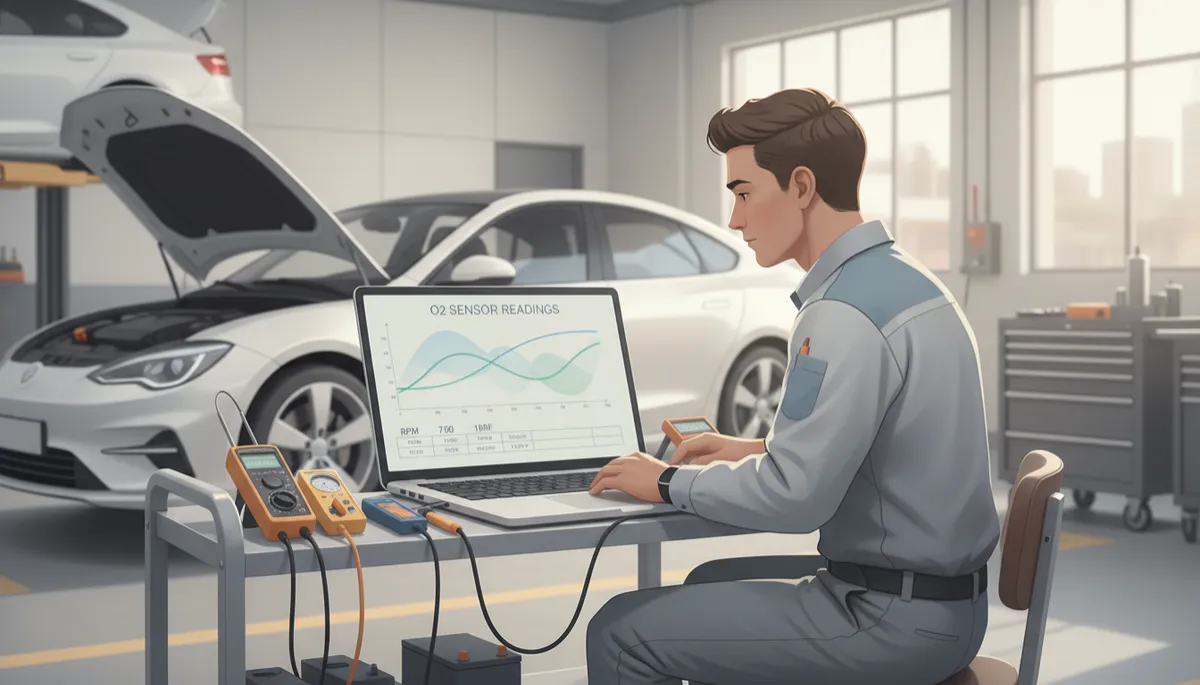
Live data analysis helps separate a truly bad converter from sensor or engine issues.
Why a Real Diagnosis Saves Money — and Your New Converter
Catalytic converters are expensive, and on many vehicles they’re part of the exhaust manifold or come in welded assemblies. Replacing one without understanding why P0420 set can mean installing a brand-new converter in front of an engine that’s still misfiring, burning oil, or running rich — the same conditions that can quickly ruin the new part and bring the code right back.
By contrast, a proper diagnostic approach treats P0420 as a symptom, not a sentence. It separates a worn-out catalyst from a lazy sensor, a pinhole exhaust leak, or an underlying engine problem. That protects your wallet today and helps your vehicle stay cleaner, more efficient, and code-free tomorrow.
Pro Tip: When you hear “It’s the catalytic converter” after a 30-second scan, ask what tests were done to confirm it — and if the answer is “none,” you don’t have a diagnosis yet.
The Bottom Line for Drivers
The local parts store isn’t wrong to tell you that P0420 relates to the catalytic converter. But there’s a world of difference between reading that code and truly diagnosing why the catalyst efficiency is below threshold. Before you approve an expensive repair, make sure someone has taken the time to track down the real cause — not just the code on the screen.