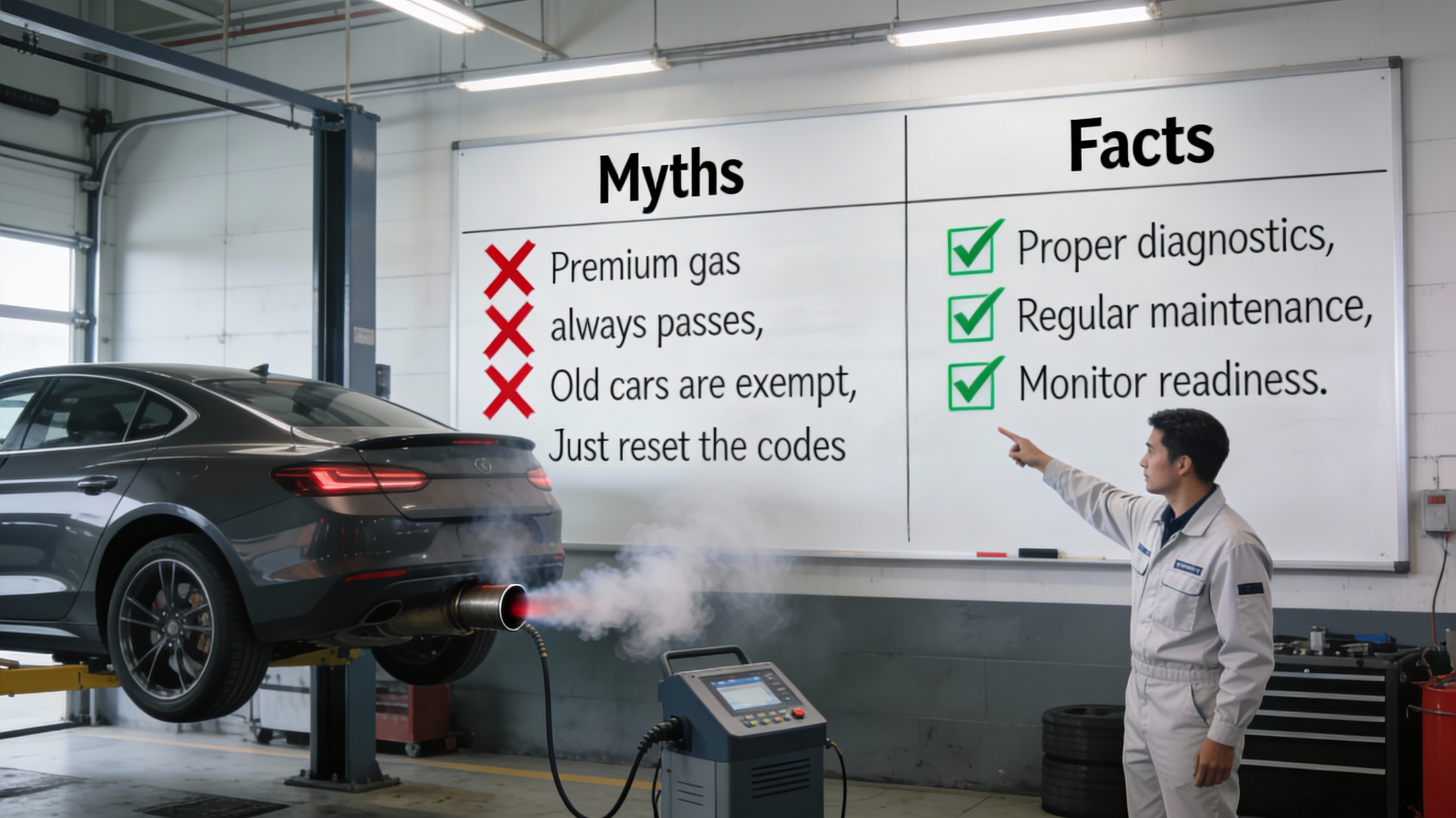
Smog myths debunked
Top 5 Smog Myths Debunked by a Certified Master Mechanic

After years specializing in California emissions diagnostics and working with thousands of vehicles here in the High Desert, I've heard just about every smog check myth imaginable. Some of these misconceptions are harmless, but others can cost you time, money, and unnecessary stress.
Let me set the record straight on the most common myths I encounter.
Myth 1: All Smog Stations Can Diagnose and Fix Smog Problems
This is perhaps the most costly myth in terms of wasted time and money. In California, there's an important distinction between test only stations and test and repair stations. Test only stations can perform smog inspections but cannot perform any repairs. Test and repair stations can do both, but there are restrictions.
What many people don't realize is that if you fail your smog check at a test and repair station and have repairs done there, that same station cannot retest your vehicle. You must go to a different station for the retest. This is a consumer protection measure.
Additionally, not all repair shops are created equal when it comes to emissions diagnostics. Smog-related issues can be incredibly complex, involving sensors, computer systems, catalytic converters, and intricate emissions control components. While many general repair shops can handle basic maintenance, specialized emissions diagnostics often require advanced training and equipment.
Through my years specializing in emissions systems, I've encountered cases where vehicles bounced between multiple shops because the technician was replacing parts without proper diagnostics. A skilled diagnostician will use proper tools and systematic testing procedures to identify the root cause before recommending repairs.
Myth 2: Premium Gas Will Help You Pass Smog
I hear this one constantly: If I fill up with premium gas right before my smog test, it'll help me pass. The truth is that using premium fuel when your vehicle is designed for regular unleaded won't improve your emissions. Your engine's computer is calibrated for a specific octane rating, and using premium fuel in a vehicle designed for regular provides no emissions benefit.
What premium fuel does is resist pre-ignition in high-compression engines. If your vehicle doesn't require it, you're simply wasting money. The octane rating has nothing to do with how clean the fuel burns from an emissions standpoint.
What actually matters is using fresh, quality fuel from a reputable station. Old or contaminated fuel can definitely cause emissions problems. If you've been letting your vehicle sit for extended periods with old gas in the tank, that's a legitimate concern. But switching from regular to premium the day before your test won't magically fix emissions issues.
Myth 3: Changing Your Oil Right Before the Test Will Guarantee a Pass
While maintaining proper oil changes is absolutely essential for your engine's health and can certainly affect long-term emissions performance, changing your oil the day before a smog test won't necessarily help you pass if you have underlying problems.
What happens when you change your oil right before a test is that you might temporarily mask certain issues. However, the smog test measures actual tailpipe emissions and monitor readiness, not the appearance of your exhaust.
That said, severely degraded oil can absolutely affect emissions by reducing engine efficiency. The key is maintaining regular oil changes according to your manufacturer's specifications all year long, not scrambling to change it right before your smog appointment.
Myth 4: Disconnecting Your Battery Will Reset Error Codes and Help You Pass
This myth is particularly troublesome because it's based on a kernel of truth but leads people down the wrong path. Yes, disconnecting your battery will clear diagnostic trouble codes from your vehicle's computer. However, this strategy will backfire during a smog check.
Here's why: When you clear the codes by disconnecting the battery, you also clear all the readiness monitors that the smog station checks. For newer vehicles, California requires that most monitors show ready status before the vehicle can pass. After a battery disconnect, these monitors show not ready, and the smog station will reject your vehicle for testing.
Getting these monitors to reset to ready status requires completing specific drive cycles that can take considerable driving under various conditions. Some monitors are particularly stubborn and require very specific driving patterns. I've seen people delay their smog check for weeks trying to get all monitors ready after disconnecting their battery.
If you have a check engine light on, the proper approach is to diagnose and repair the actual problem, not try to hide it. The smog technician will know immediately if someone has recently cleared codes, and it raises red flags.
Myth 5: Older Cars Are Exempt from Smog Checks
Many people believe that once a vehicle reaches a certain age, it's exempt from California smog requirements. The reality is more nuanced. In California, newer vehicles are exempt from biennial smog inspections but must still pay an annual smog abatement fee. Older vehicles require biennial smog inspections.
However, there are exemptions for very old vehicles. Additionally, certain diesel-powered vehicles and other vehicle types are exempt. The rules can be complex, and they change periodically. If you're unsure about your vehicle's smog requirements, the California Bureau of Automotive Repair's website has current information, or you can ask a licensed smog station before making an appointment.
The Bottom Line
The best approach to passing your smog check is maintaining your vehicle properly throughout the year, addressing check engine lights promptly, and working with qualified technicians who understand emissions systems. There are no magic shortcuts or last-minute tricks that substitute for proper maintenance and repair.
If you're concerned about an upcoming smog test, consider having a pre-inspection performed by a knowledgeable technician who can identify potential issues before you go to the official testing station. This proactive approach saves time, money, and frustration.

Oh and don't even get me started on the myth that putting alcohol in your tank before the test will help you pass an emissions test. More on that another day.


